
Living Alone After a Breakup: The First Month in a House Set for Two
Living alone after a breakup or divorce: how to make a house stop reminding you hourly, who still has access to it, what it costs, and what to leave alone.
A house that was arranged for two people keeps working as though both of them are still in it. The second toothbrush glass, the side of the bed nobody is warming, the coffee order at the door, the light your ex used to switch off last. Living alone after a breakup is partly an emotional problem and largely an interior design problem, and the design half is the one you can do something about this week.
Living alone after a divorce or a breakup starts as a problem of noise rather than of feelings, and the goal for the first month is a house that stops reminding you on the hour. Not a new life, not a renovated apartment. Everything else can wait, and some of it should. Nothing here is legal or financial advice, and where a decision has money or a lease attached, that is a question for someone licensed where you live.
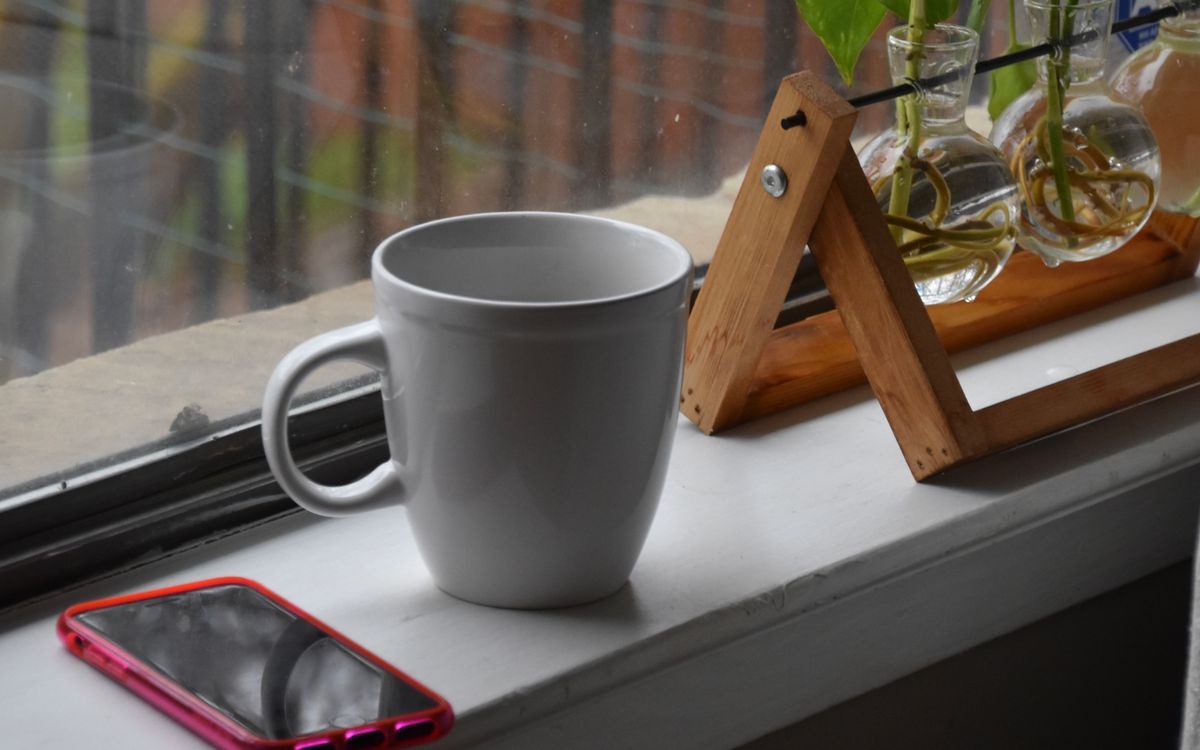
Why is living alone after a breakup so loud?
Because you are hearing the absence of noise you had stopped noticing: another person moving in a different room, a second set of dishes, the television talking to itself while someone half watches it. (If the quiet is more about people than about rooms, that is friendships after divorce, which is a different problem with a different fix.)
The fix is not to fill every hour. It is to give the quiet a shape, so that silence is something you chose rather than something that happened to you.
- Put sound on a schedule rather than on all the time. The radio while you cook, off while you eat. A podcast for the commute, nothing for the walk back.
- Run the dishwasher or the washing machine in the evening. Domestic machine noise is one of the few sounds that reads as somebody being home.
- Keep one room deliberately silent. If every room has something playing, there is nowhere to sit down.
Some people mend loudly and some quietly, and both work. Nothing here says a full calendar is denial, or that a quiet apartment is wallowing.
What to change in the first week, and what to leave alone
If you have only just moved into an empty place, start with the first two weeks there instead. This section is about a home you are already in.
Change the things that are set for two and cost nothing to alter. Leave the things that are expensive, permanent, or tied to a decision you have not made yet.
Worth doing now:
- Move to the middle of the bed, or to the side you never used. New sheets if you can afford them, a different pillow arrangement if you cannot. (Why the sleep goes first, and what else helps.)
- Take the second toothbrush, the second robe, and the second mug off the shelf. Not into the trash necessarily. Into a box, out of eye level.
- Reset the chairs. Two chairs facing each other at a table is a conversation waiting for someone. Turn one to the window, or take one out of the room.
- Change what greets you at the door. A different mat, a lamp on a timer, anything so that coming home is not identical to the way it looked when it was both of you.
- Reclaim one surface completely, even a small one. A kitchen counter, a shelf, a windowsill. Something that is now only yours.
Worth leaving:
- Repainting, rearranging entire rooms, and buying furniture. Decision fatigue is real in month one, and expensive choices made in it tend to get made twice.
- Throwing out photographs. Boxing them up is reversible. A trip to the dumpster is not.
- Their remaining belongings, if a move-out is still being negotiated. Do not turn a possession into a bargaining chip you will regret. (How to arrange the collection in three sentences.)
- The big one: moving house. See below.
Who still has access to your home?
People finish this six months late, usually because it feels dramatic while everything is still polite.
Keys. Not only your ex, but whoever was given a spare during the relationship: their parents, a friend of theirs, a neighbor. Deciding who should hold one now is a separate question, and it belongs with the emergency contact form rather than with the locksmith. Whether you can change a lock depends on whose name is on the deed or the lease and what any court order says, so ask before you call a locksmith. If you rent, the lease and your state's landlord rules govern it, and your landlord may have to do it.
Smart home devices after a breakup are the modern version of a spare key. A door lock, a camera, a thermostat, a doorbell, or a speaker can still be under an account you no longer share a life with. Google's support page on home members is explicit: "You can only remove other people from a home if you have Admin level permission", and once someone is removed, "Their account isn't linked to the devices and they won't have access to the devices or services in the home." Anyone still in your home group can use "Basic device controls (ex. live view of cameras)", which means an ex who was never removed can open a live feed of a camera sitting in your living room.
Go through them one evening with a list: door locks, cameras, doorbell, thermostat, speakers, vacuum, television, car if it has an app. Remove old members, change the passwords, and turn on two-factor authentication where you can.
Shared logins and family plans. Streaming accounts show viewing history and often a rough location. Photo libraries sync. Delivery apps hold your address. None of this is urgent in the way a lock is, and all of it is worth an hour with a password manager. The full sweep, in the order that matters, is the digital untangling.
One exception that outranks the whole section. If you are afraid of the person you are separating from, do not start unlinking accounts and changing locks on your own judgment. Removing someone from a shared account can tell them exactly when you did it, and that timing matters when someone is dangerous. The National Domestic Violence Hotline is 1-800-799-7233, or text START to 88788. They do safety planning, including the technology part, and they do it every day.
What does living alone after a breakup actually cost?
Before the money, one thing costs nothing and changes a room faster than furniture does: what is still on the walls.
Rent or mortgage does not halve when the household does, and that arithmetic is better done on paper than discovered in March. Insurance, filing status, and joint debts all move at the same time and several of them have real deadlines, which is the first 90 days rather than this piece.
The CFPB's budgeting guidance, which now sits in the agency's archive, walks through it in four steps, and they are the right four: "Step 1: Where does my money come from?", "Step 2: Where does my money go?", "Step 3: What are all my bills and when are they due?" and "Step 4: Create your working budget." Their bill calendar exists for the specific problem of money arriving on a different day from when it is needed.
For a first month alone, three of those matter most:
- The fixed pile. Housing, utilities, insurance, phone, transport, debt payments. This is your real floor, and it is usually higher than the number in your head.
- What was invisibly shared. One internet bill, one streaming subscription, one Costco run, one car. Losing the second income and the shared cost at once is what makes month two a surprise. (The longer-range money questions, including credit and retirement accounts, are here.)
- The timing. Rent on the first, salary on the fifteenth. Knowing the gap in advance turns a crisis into an annoyance.
If the numbers do not work, treat that as information about a lease and a salary rather than a verdict on you. It is also the point at which a financial adviser or a housing counselor earns their fee, and much better now than after three missed payments.
What did they used to handle without telling you?
Every household splits its operations without writing them down, and the split stays invisible until one person leaves. What surfaces first is rarely the large stuff. It is the recurring small items with dates attached: which day the recycling actually goes out, when the car registration expires, that the furnace filter is on a schedule, which subscription renews in March at a price nobody has looked at in two years.
These fail in two different ways. Some carry a deadline and a penalty behind it: registrations, insurance renewals, inspections, the autopay that was running on their card. Others decay quietly instead, and nothing looks wrong until the thing stops working.
The fix is boring and it holds: one evening with a calendar, putting every recurring item on it with a reminder attached. A second person in a house is partly a memory system, and replacing that with software is less bleak than it sounds and considerably more reliable.
The other half is skill rather than memory. There will be a few things you do not know how to do, because for years you did not have to. Being a beginner at forty at resetting a breaker or bleeding a radiator says nothing about you, and there is no version of this where looking it up is embarrassing.
One more thing worth naming, because it tends to arrive with feelings attached: doing all of it yourself is also how people find out what the old split actually was. Sometimes the discovery is that they were carrying more than you had noticed. Sometimes it is that you were. Neither is worth relitigating with somebody you no longer live with.
How do you cook for one without wasting half of it?
Cooking for one after a breakup is a real skill and nobody teaches it. Recipes serve four. Supermarkets sell in family units. The result is a fridge that quietly rots while you eat toast standing up.
- Buy for three days, not for the week. Less waste, and the shop becomes a small errand rather than a project.
- Cook one thing on purpose in a double portion, freeze half in a single portion. Not batch-cooking Sunday, just one deliberate extra meal.
- Keep three "no-effort dinners" permanently stocked: eggs and bread, soup and cheese, whatever version of that you like. These are for the evenings you cannot start anything.
- Eat somewhere other than the table you used to share, at least for a while. A counter, a desk, the sofa. Nobody is grading this.
- Watch the drift toward never eating a real meal. Living alone makes it easy to graze from the fridge for a month and wonder why you feel terrible.
What do you do with the weekend?
Weekdays have scaffolding. Saturday afternoon and Sunday evening are where the apartment gets loudest, and they are worth planning slightly in advance rather than facing at 2pm on the day.
One anchor per weekend is enough. A class, a market, a run, a friend who has a standing coffee with you, a shift somewhere volunteering. It should be an appointment with a time attached, because "I'll go out at some point" is a plan that loses to the sofa. The same trick, booked further ahead, is what gets people through the first holidays alone.
Leave the rest of the weekend genuinely empty. One fixed point gives the two days an edge to hold onto. If the weekend is empty because your children are at their other parent's house, it is the same mechanics with an extra layer on top, and that version is in weekends without your kids. A weekend packed tight enough to outrun the thinking usually just costs you Monday as well.
Should you move?
Probably not this month, and probably not for the reason you are considering it.
Moving is the most tempting decision available: a new place with no history in it. It is also expensive, exhausting, and permanent enough to be hard to undo, and month one is when your judgment is at its worst. There are good reasons to move (the rent alone is not survivable, the lease ends anyway, the commute stops working, you are not safe there) and one bad one that dresses up as all the others, which is wanting to be somewhere the last two years did not happen.
If the money question is genuine, work through the numbers above first and talk to someone who does this for a living. Anything involving a mortgage, a joint tenancy, or children's schooling is a legal question before it is a lifestyle one. What to handle first, and in what order, is covered in the first 90 days.
What does the first month living alone actually look like?
Less like an arc and more like weather. Two good evenings, then a Tuesday that flattens you for no reason you can name. Then a week where the place is just a place and you notice, with something like suspicion, that you have not thought about them since lunch.
You will also catch yourself keeping the house for an audience, tidying it the way they liked it, or leaving it deliberately messy in a small act of protest against nobody. Both wear off.
Living alone after a breakup gets easier in a way that is hard to see from inside week two: not because the rooms change, but because they stop being about a person and go back to being rooms. The bed becomes a bed. The second chair becomes a place to put the laundry. That is most of what the first month is for.
Frequently Asked Questions
How long does it take to get used to living alone after a breakup?
Most people describe weeks rather than days for the practical part (sleeping, eating, the shape of an evening) and longer for the part where the home stops feeling like a place someone left. There is no standard number, and having a bad month six months in does not mean you are doing it wrong.
Should I change the locks after my partner moves out?
Ask before you do it. Whether you can depends on the lease, the deed, and any court orders in place, and doing it wrong can create a legal problem on top of the one you have. If safety is the reason you are asking, call the domestic violence hotline above rather than sorting it alone.
Is it normal to sleep badly in an empty house?
Very common, and it is often about sound and safety rather than sadness. A lamp on a timer, a locked door you checked once and can stop checking, some low background noise, and a bed that no longer looks set for two all help more than they sound like they will.
Should I get a pet to fill the house?
Maybe, and not in month one. A pet is a ten to fifteen year commitment made at the point of lowest judgment, and shelters see the returns. If you want the company sooner, foster, or borrow a friend's dog for weekends and see how it fits your actual week.
How do I stop my ex accessing our shared accounts and devices?
Remove them as a member from your home or account, change the password, and turn on two-factor authentication. Start with anything physical or watching: door locks, cameras, doorbells. Do this at your own pace unless safety is a factor, in which case get advice first, because the change itself is visible to them.
What if I do not know how to do the things my ex always handled?
Look them up one at a time, as they come due, rather than all at once. Most of it turns out to be admin with a date attached rather than skill: renewals, filters, which day the bins go out. Those belong on a calendar with reminders, since a second person in a house is partly a memory system. The genuinely practical skills can be learned in the order they become urgent, and nobody is grading the timeline.
Is it strange to still set out two of everything?
That is habit doing what habit does. Reflexes built over years carry on after the paperwork stops. Moving the second mug takes a second and the reflex takes longer, and neither is a measure of how well living alone after a breakup is going.