
When Your Child Does Not Want to Come to Your House
Your child does not want to come to your house. The five different reasons behind it, what to do at the exchange, and the word this piece will not use.
"I don't want to go to Dad's." A child does not want to come to my house is a sentence that arrives without warning: said in a car, or at a door, or reported back to you by your ex in a text that took ten seconds to write and will cost you a week.
Refusal is not one thing. It has at least five different causes, and the right response to each one is different enough that guessing wrong makes it worse. The first job is not persuasion. It is working out which of these you are looking at.
I am not a child psychologist. Nothing here diagnoses your child or your ex, and where a refusal involves fear, that is the first section rather than a footnote.
This article contains an affiliate link to a book. If you buy through it, this site may earn a small commission at no extra cost to you. As an Amazon Associate I earn from qualifying purchases. See the affiliate disclosure.
Before anything else: is this a safety signal?
A child refusing to go somewhere is sometimes telling you the only way they can that something is wrong there.
If your child is frightened rather than reluctant, if they describe being hurt or being alone with someone who scares them, if the refusal is specific ("I don't want to be there when X is there") rather than general, that is not a visitation problem and none of the exchange advice below applies.
What to do instead: listen without leading them, write down what they said in their words as soon as possible rather than paraphrasing later, and call your lawyer. If there is immediate danger, call 911. If you need to think through safety before you act, the National Domestic Violence Hotline is 1-800-799-7233 or text START to 88788, and they handle situations involving children constantly.
Do not interrogate the child, do not secretly audio-record or film them, and do not confront your ex before you have advice. All three can damage both the child and your position.
That said, most refusals are not this. The rest of this piece is about the other four.
Why does my child not want to come to my house?
Five reasons account for most of it, and they need different responses. Reading the wrong one produces the wrong fix, which is how a transition problem gets treated as a loyalty problem for two years.
1. Transition, not rejection (mostly under six). Small children struggle with the switch itself rather than with the destination. The crying happens at the drop-off and stops fifteen minutes later, which parents almost never find out because nobody tells them. If the reports from the other side describe a child who settles quickly, believe them. What else changes at this age, including what researchers still disagree about on overnights, is in divorce with a toddler.
2. Normal adolescence. This one gets misread constantly. AACAP's description of early and middle adolescence includes "Less overt affection shown to parents, with occasional rudeness", "Complaints that parents interfere with independence", "Interests and clothing style influenced by peer group", and "Realization that parents are not perfect; identification of their faults".
Read that list as a parent whose teenager does not want to come over this weekend. A fourteen-year-old who would rather be with friends, finds you annoying, and has recently noticed your flaws is not rejecting you and is not being turned against you. They are fourteen. The divorce gives that ordinary developmental stage a convenient shape and a convenient explanation, and taking it personally is the single most common error at this age.
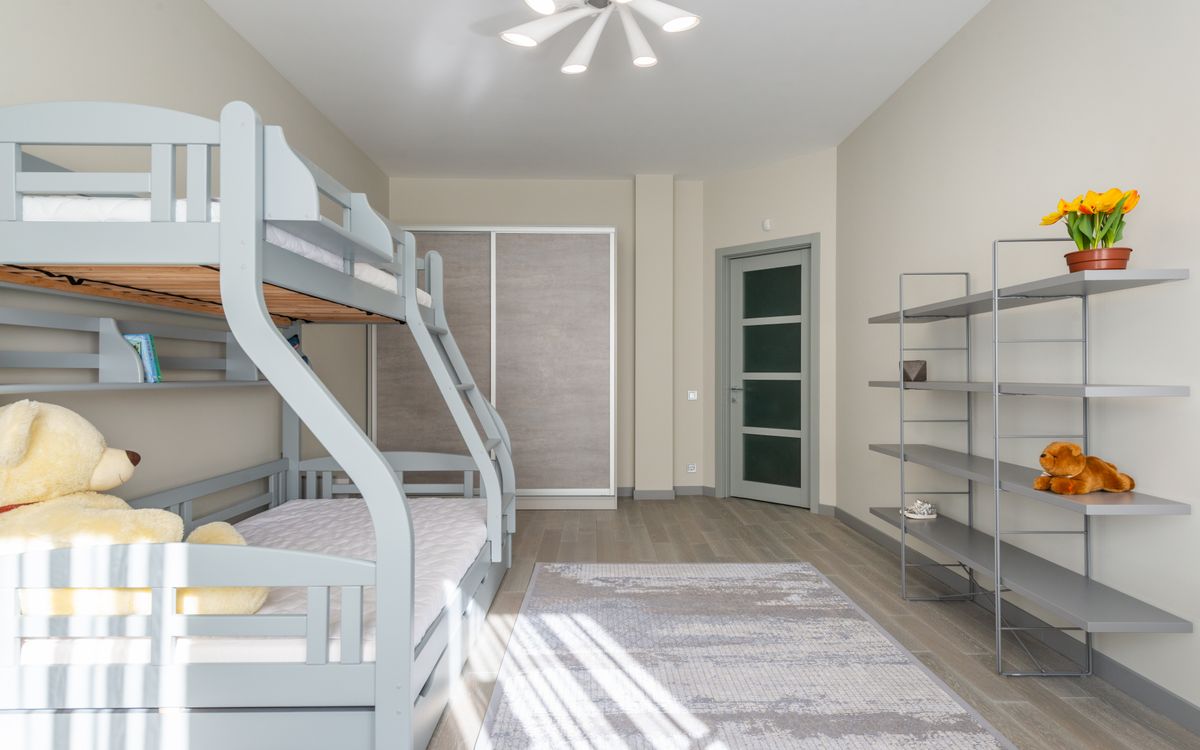
3. The house is not a home yet. No space of their own, none of their things, nothing to do, a bed that is really a sofa. Children are literal about this. If the place feels like somewhere they visit, they will resist visiting. That is fixable and it is on you rather than on them: setting up a place of your own covers the version of this that actually matters, which is a drawer and a shelf rather than a bigger television.
4. Loyalty conflict. A child who senses that one parent is sad, angry, or alone when they leave will try to solve that by not leaving. This can happen without anybody engineering it. It also gets worse when a parent, even accidentally, signals that the visit costs them something: a sigh, a "I'll just be here on my own then", a change of face at the mention of the other house.
5. Something specific in your house. A new partner, stepsiblings, a rule they hate, a room they share, your own state on the weekends. Worth asking yourself honestly before assuming the cause is elsewhere.
What to do at the custody exchange itself
The exchange is where most damage happens, and it takes about ninety seconds.
- Keep it short and boring. Greeting, bag, go. Long goodbyes make a small child's transition harder rather than easier.
- Do not negotiate at the door, with the child or with your ex. Whatever needs deciding gets decided later, in writing, in the format in messaging your ex.
- Do not make your face the problem. Children scan the departing parent for permission. A flat, cheerful "have a good time, see you Sunday" is doing more work than anything you could say afterwards.
- Use a neutral exchange point where it is tense: school pickup, a relative's house, anywhere that removes the doorstep confrontation entirely. Using school as the handoff works better when the school already has you correctly on file, which is its own piece of admin.
- Let them arrive slowly. A child who is quiet for the first hour is normal. Filling that hour with questions about the other house makes the next arrival harder.
What not to do
- Do not interrogate. "Why don't you want to come?" puts a child in the position of having to explain something they may not understand, and often produces an answer invented to end the conversation.
- Do not bribe. A house that competes on snacks and screens becomes a place they visit for snacks and screens, and the routine that actually settles them never gets built.
- Do not use their words as ammunition. Repeating a child's complaint back to your ex, especially in writing, teaches the child that what they say gets forwarded. They will stop saying things.
- Do not let a young child hold the decision. Asking a seven-year-old whether they want to go makes them responsible for a choice between two parents. Adults set the schedule; children get a say in the details.
- Do not stop trying. Reduced, reliable contact is better than none, and a refusal accepted permanently at fourteen is very hard to reverse at seventeen.
The word this piece will not use
There is a term for a child being turned against a parent. You will meet it constantly in divorce forums and in some legal filings, and I am not going to use it as a diagnosis here.
Two reasons. It is contested rather than settled, and it is used as a weapon by both sides in family disputes, including by people who have been abusive and want to reframe a child's fear as manipulation by the other parent. A label like that, applied by a parent in the middle of the conflict, is not evidence of anything and does not help a child.
The researchers who study this draw the same line. In the paper that first argued for retiring "parental alienation syndrome" as a diagnosis, Kelly and Johnston write: "Children who are realistically estranged from one of their parents as a consequence of that parent's history of family violence, abuse, or neglect need to be clearly distinguished from alienated children." That is the same split as the safety question at the top of this piece, made by the people who study it for a living rather than by a website.
What is actually useful: describe behavior, keep records, and let professionals form the opinions. Note dates, what was said, what happened at exchanges, what was canceled. Do not editorialize in your notes. If a pattern is real, a documented pattern is worth vastly more to a lawyer or a court-appointed evaluator than a parent's label for it.
If you genuinely believe your child is being pressured, that goes to your lawyer and a child and adolescent professional, in that order. Not to the child, and not to the other parent in a message you write at midnight.
Can you make a child go if they do not want to come to your house?
With an older child this stops being a question about authority and becomes one about logistics, which is covered separately in divorce with teenagers.
Legally, that depends entirely on where you live and what your order says, and there is no age at which a child universally gains the right to refuse, despite what the internet will tell you with great confidence. Ask your lawyer about your order rather than trusting a forum.
Practically, the answer changes with size. You can carry a four-year-old to a car. You cannot make a sixteen-year-old walk through a door, and trying converts a schedule problem into a relationship problem.
Where refusal is persistent with an older child, the workable moves are usually smaller than a court application: shorter visits, a meal instead of a weekend, going to their events rather than requiring them to come to your house, and a stated open door. Volume of contact matters less than reliability of contact.
Tell your ex what you are doing, in writing, without accusation. A parent who documents an attempt to keep contact going is in a better position than one who lets a schedule quietly lapse.
The long game
Refusal at nine is not a verdict, and refusal at fifteen is often about a weekend rather than about you.
What tends to work over years is boring: show up, keep the door open, do not make them manage your feelings about it, and stay reliably where you said you would be. Adolescents in particular return to parents who did not make their absence into a crisis.
For the years-long version of this, one book covers the ground from toddlers to teenagers without pretending any of it is simple: The Co-Parenting Handbook by Karen Bonnell and Kristin Little. It is practical rather than clinical, and it is honest about the fact that a parenting schedule has to change as the child does.
Whatever the cause turns out to be, the thing that helps every version of it is the same one from the guilt question: keep the conflict out of their sight, and make it explicit that they are allowed to love both households. A child who does not have to choose has much less reason to refuse.
When to get help
Worth a call to the pediatrician if the refusal comes with changes that last: sleep, appetite, school, withdrawal from friends, or anything that frightens you. AACAP's route for a distressed child runs through the family doctor, who can refer onward for evaluation.
Worth a call to your lawyer if the refusal is persistent, if the other parent is not supporting the schedule, or if you are considering any change to the arrangement. Changing a pattern informally and then arguing about it later is the expensive version.
Frequently Asked Questions
My child does not want to come to my house. What does it mean?
Usually one of five things: a small child struggling with the transition itself, an adolescent pulling away as part of normal development, a house that does not yet feel like theirs, a loyalty conflict, or something specific happening at your place. If the refusal involves fear, treat it as a safety issue and get advice before doing anything else.
Can I make my child visit if they refuse to go?
That depends on your state and your order, and no article can answer it for your case. Practically, physical compliance is possible with a small child and not with a teenager, and forcing an older child usually costs more in the relationship than it gains in the schedule.
At what age can a child refuse visitation?
There is no universal age, whatever forums claim. Some places weigh an older child's preference more heavily, but the rules and how a court applies them vary. Ask a lawyer where you live.
My toddler cries at every drop off. Am I damaging them?
Crying at the transition is common and usually stops shortly after arrival. What helps is short, calm goodbyes and a consistent routine. If the distress continues well into the visit or shows up in sleep and eating, raise it with the pediatrician.
My child refuses to visit me. Is something wrong at my house?
Usually not, and the age of the child is the fastest way to narrow it. Under six it is generally the transition rather than the destination. In the middle years it is often something concrete and fixable, like boredom or a missing possession. With teenagers it is normally a social calendar rather than a verdict on you.
Is my ex turning my child against me?
It is possible, and it is also possible that you are seeing normal adolescence, a loyalty conflict nobody engineered, or a house that feels unwelcoming to a child. Rather than applying a label, document behavior and dates and take the pattern to your lawyer and a child professional.
What do I do if a teenager refuses visitation?
Reduced and reliable beats forced and resented, but stopping entirely tends to be very hard to reverse. Shorter visits, meals, and turning up to their events keeps the relationship alive while the schedule adjusts. Tell your co-parent in writing what you are doing and why. A child who does not want to come to my house this month is not a permanent verdict on anything.